I celebrated St. Patrick's Day by shooting a lot of green stuff out of my nose. In the midst of being unfit for anything else, I had time to finish the second half of Quiet: The Power of Introverts in a World That Can't Stop Talking, by Susan Cain (Crown, 2012).
It's no surprise to me or anyone who has known me for more than a
minute that I'm an introvert. After all, in the face of student loans and a mortgage
I voluntarily quit an office job, which had me sitting almost directly
in a traffic pattern and being interrupted every few minutes, to start the rather risky enterprise of
freelance copyediting from my home office, where I could go weeks
without ever talking to anyone besides my family and the clerk at the
grocery store if I wanted to.
So enjoying a book that celebrates the introvert is obviously well within my wheelhouse, but I wasn't quite expecting to read a book that explained me to myself so clearly. Amid the discussion of brain chemistry and magnetic resonance imaging scans, the takeaway is that one-third to one-half of the population is like me. We enjoy parties as much as the next person, but we're likely to get tired and go home sooner. Public speaking may or may not cause abject terror, but regardless of whether we feel stage fright (I usually don't), we are more likely than our extrovert counterparts to plan our remarks ahead of time--which explains why I type out a full script every time I have to make a 30-second announcement in church. If we have jobs that require lots of interaction with co-workers and the public, even if we love and are passionate about what we do, we're likely to want nothing more at the end of the day than to be left alone to hibernate.
And whoever said planning ahead and a little judicious hibernation are bad things? I didn't pick up Quiet expecting a self-help book, but I did find validation for the way I prefer to approach the world as well as suggestions for how to make my, um, quiet approach more efficient and effective. In addition to the positive introvert attributes like the tendency to plan ahead and to work longer to solve problems before giving up (can you say stubborn?), Cain discusses the value of developing extrovert-style skills for particular, limited situations--and somehow that's easier to take when you're given permission to come home at the end of the day and be as quiet as you like. But she also emphasizes that extroversion as a personality type is in no way superior to introversion. Extroverts need to learn to channel their inner introverts as well, she argues. Enron and the 2008 Wall Street meltdown? You can thank the extroverts, with their tendency to accept the ideas of the person who speaks persuasively rather than intelligently, for that.
As for me, it was when I started working from home
that I began to genuinely enjoy socializing. When I worked by myself all
day, I found that rather than being drained by the end of the day, I was
energized. The idea of facing a group of human beings didn't, for maybe
the first time ever, make me feel slightly nauseated. Almost without
noticing, I was suddenly a member of a knitting group, a church, a book
group, a committee. And what's more, I enjoyed it! I had more
commitments than I've ever had in my life, and instead of feeling
overwhelmed and put-upon, I loved it.
In the last few months, my work situation has changed again. I've taught more on-campus classes recently (and I've never "performed" more energetically than when trying to keep a roomful of eighteen-year-olds engaged in grammar and composition), and that has drained a lot of energy and affected my social life. I've pretty much stopped participating in anything I'm not obligated to do partially because my work schedule has been so full, but also largely because the idea of sitting in a group of people and being expected to make conversation seems so exhausting. Now I've started a part-time job that has a good mix of time spent working with the public and time working behind the scenes on my own, plus a staff that genuinely values each others' need for a little quiet time on break. The unique thing about this crowd is that they respect the power of the book--if you're reading, they don't interrupt! I hope this job will complement my freelance work and teaching (online for the next two semesters), and make it possible for me to rejoin the world.
A friend recently asked me if I'm ever going back to knit night, and I gave her a flip answer that I don't remember now. The real answer is, I hope so. That part of my life is valuable. But I have to find a good work-life balance with plenty of down time to both work and play on my own. Being "in the world" is worth the energy it uses, but introverts like me can't do it without a reserve of energy to use in the first place. The beauty of Quiet is Cain's validation that, even in the midst of a culture that values the extrovert ideal above all else, my approach has been right for me all along.
Monday, March 18, 2013


Saturday, February 23, 2013
My Name is Bertie SueBell
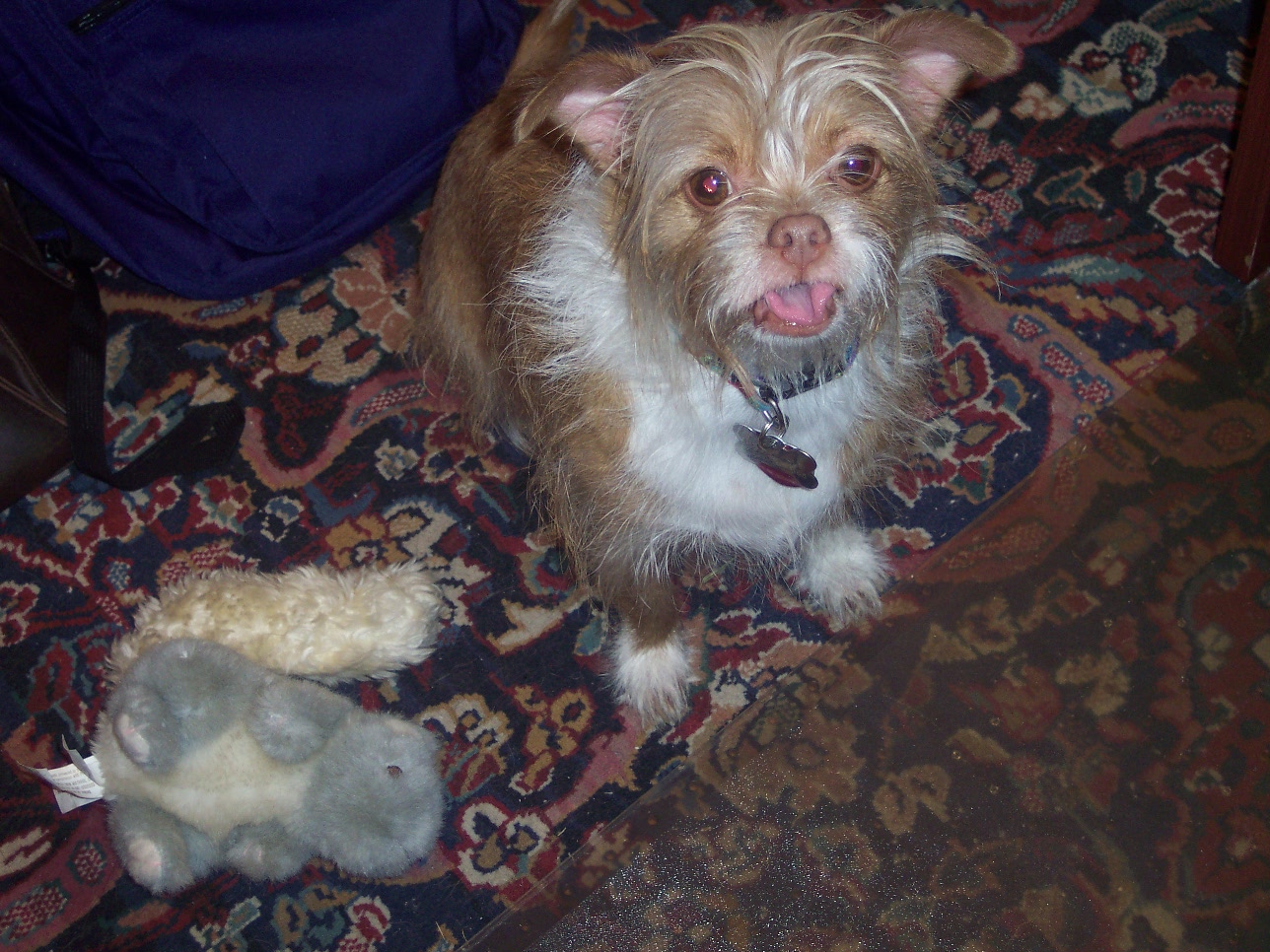 |
| Insert snackies here. |
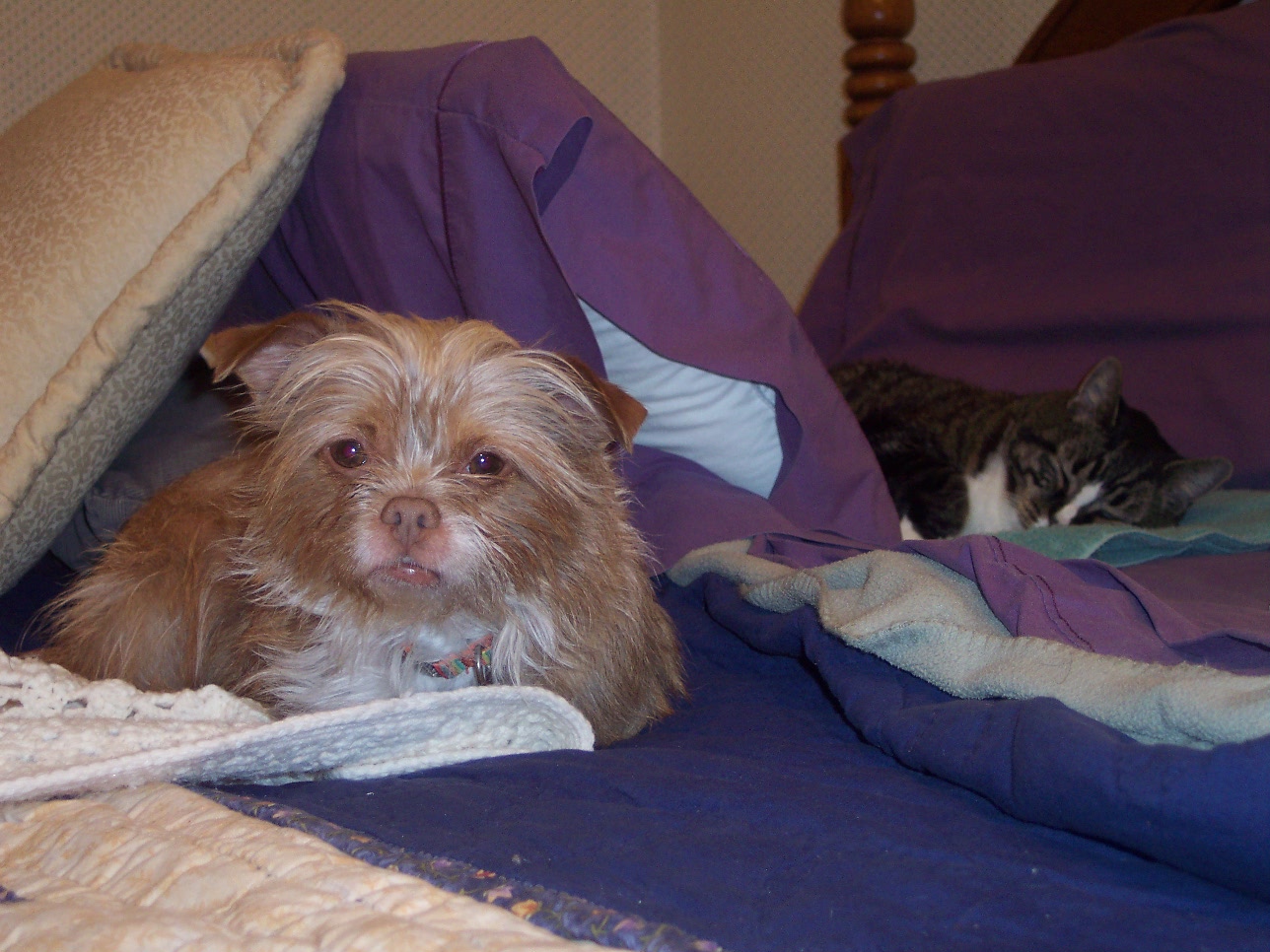 | |
| I heard a rumor that some cats live here, too, but I haven't seen any. |
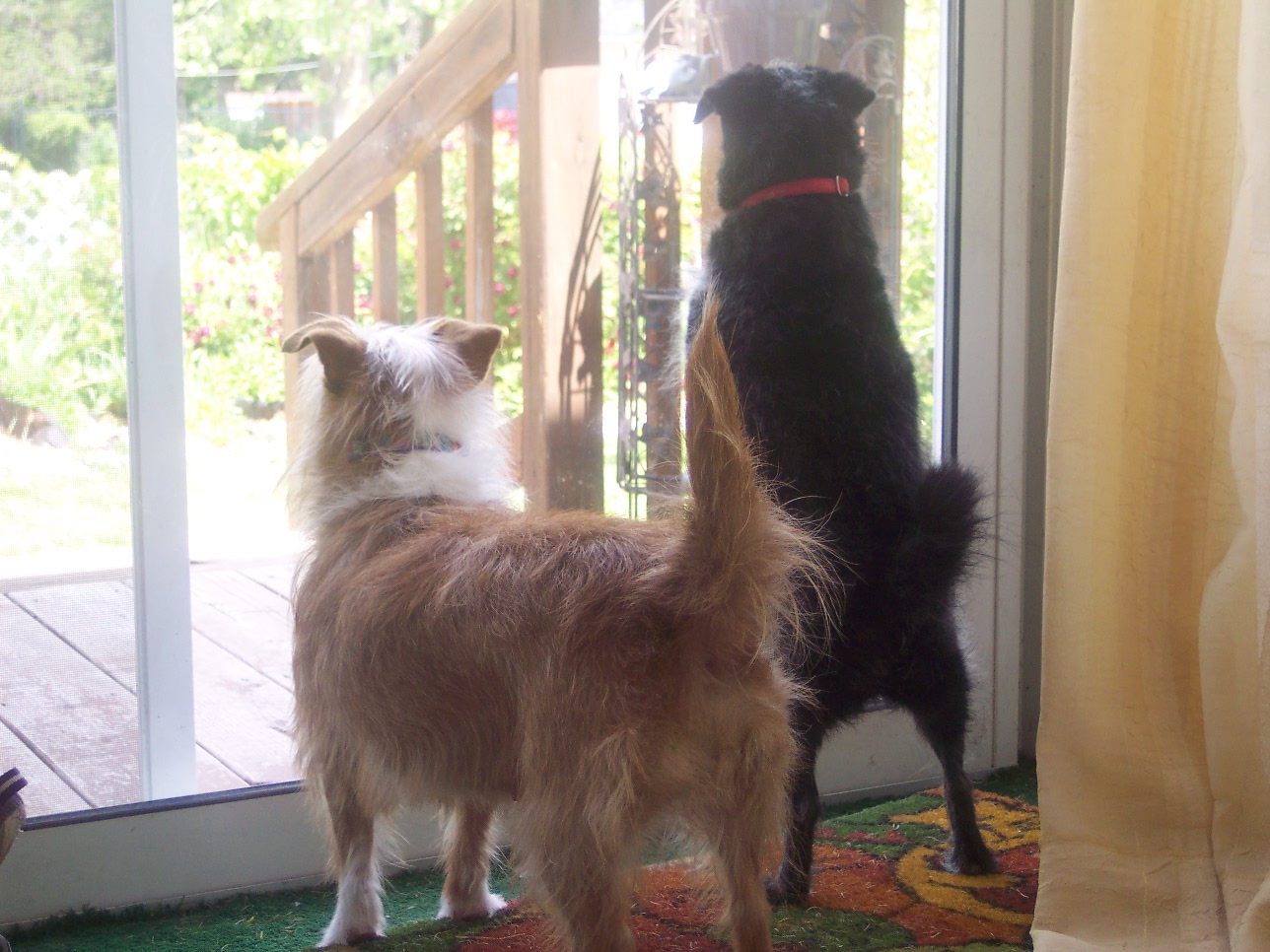 |
| Here are me and Brewie not barking. Much. |
But most of the time my name means good things. After all, I have important Bertie SueBell jobs to do now that no one else could do as well as me. Mainly I have to take good care of Brewie and the MamaLady. Brewie is a DINOS, which really just means he's a big ol' scaredy-dog, and it's my job to show him that it's okay to be brave and meet new people. Brewie watches what I do, so when I decide not to bark at someone, he knows he doesn't have to bark, either. When we go visiting somewhere, I always walk in first to show Brewie there's nothing to be afraid of. And when we go on walks together, I show him how to be brave when we walk past fences with dogs yelling at us, and we never yell back. Almost never. Mostly.
 |
| You can play Snuzzles in the grass, too. |
 |
| My most very important job. |
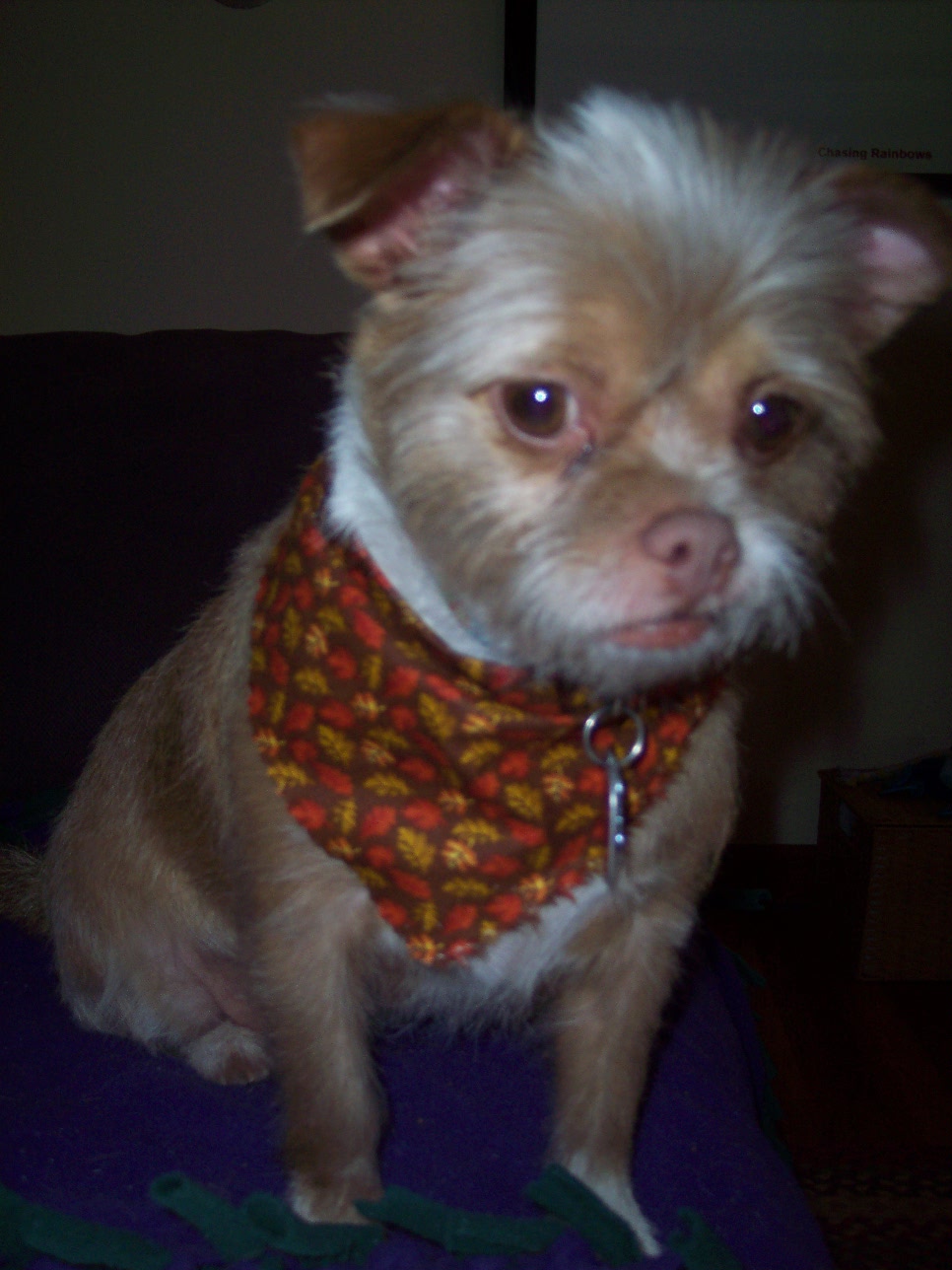 |
| I have all the beautifulnesses, too. |
So I think that of all my names, I like the one I have now the most and I will keep it. MamaLady says that of all the Bertie SueBells in the whole entire world, I am the Very Best, and since I have all the smartnesses, I know she is right about that.
Saturday, February 16, 2013
Knitting on the Job
Yesterday I started a new job. It's a wonderful job. It's right up my alley, and the people I'll be working with seem to be pleasant, friendly people. Plus it's part-time, so I get to keep copyediting and teaching, too, which makes me very happy. As usual, I'll be very busy but what I won't be is bored.
I'd love to tell you all about this wonderful job. But then I'd have to kill you. Or, more likely, I would be fired. This excellent job happens to be for a branch of government, and it was explained to me this way: As a private citizen, I can say whatever I want about politics or anything else. As a government employee, I can't express an opinion on so much as the weather, let alone political or religious issues. That would have a bit of a chilling effect on the ol' blog. I don't write about politics or religion often, but I do on occasion have something to say, and you know I have some very specific opinions on controversial issues like dogs and yarn. So, although it seemed weird not to write anything at all about this major change, I've decided to keep quiet about the details of the new gig in this public space, even though I'm VERY EXCITED and want to tell you ALL THE THINGS!
I will tell you this: We have to wear ID badges on a lanyard, and there aren't any rules about what the lanyard looks like. I'm knitting mine.

Thursday, February 7, 2013
Things Finished
First I used the wrong yarn, then I used the wrong needles. But I will not be thwarted, especially not by my own bone-headedness. I finished the hat.
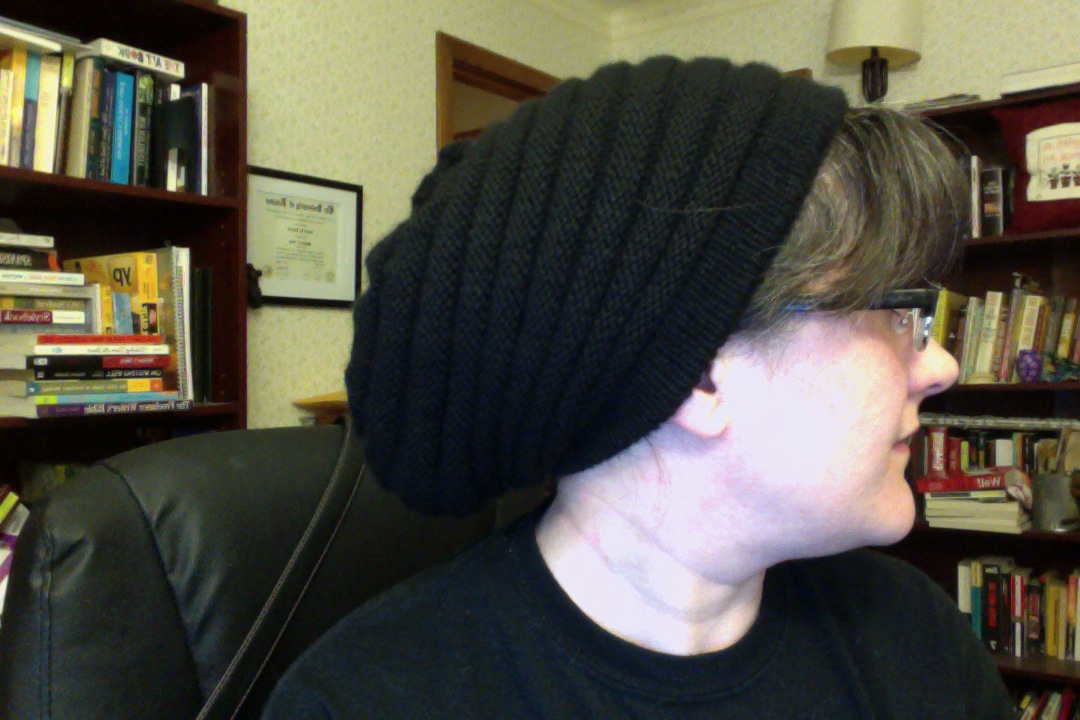 |
| Slouchy, hair-containing wondrousness. |
Friday, February 1, 2013
Things Begun
I started the hat, but I didn't like my yarn, so I've been crocheting instead.

My favorite thing about granny squares is that you can combine the most hideous colors and no one even blinks. I don't know why that is, but it's true. Granny squares exist in an alternate universe where the standard rules of beauty don't apply. Which is not to say that there aren't some arrestingly beautiful squares out there, too. I'm just not skilled enough yet to make them. Give me a minute. . . .
I started Wolf Hall, but I finally had to admit to myself that I just do not give a flip about sixteenth-century political intrigue. I also have a hang-up about historical novels. I love them as long as they place fictional characters inside real events, but when you start trying to fictionalize real people, I get antsy. Did that really happen? Is that what she would've said? And I start to resent Mantel coming along 500 years after the fact and trying to impose some sort of artistic theme or meaning on the lives that Cromwell and Henry and Wolsey and Anne and Katherine and the rest were likely just trying to get through.
Mantel's an entertaining writer, though. If you don't have my historical fiction hang-ups and you do have at least a minimum level of interest in sixteenth-century English politics, please enjoy yourself. Me, I've started The Tiger's Wife, because I think I probably will give a flip about "mysterious circumstances surrounding [a] beloved grandfather's recent death." And I'm a sucker for a "stunning debut novel." And it's been sitting on the to-read pile since last year and I'm getting tired of blowing cat fur off it.
I finished a copyedit and started another, because that's how that goes.
I started two classes, one of which will be done in two more weeks, and another that's a full semester.
I started several walks.
 Finished 'em, too.
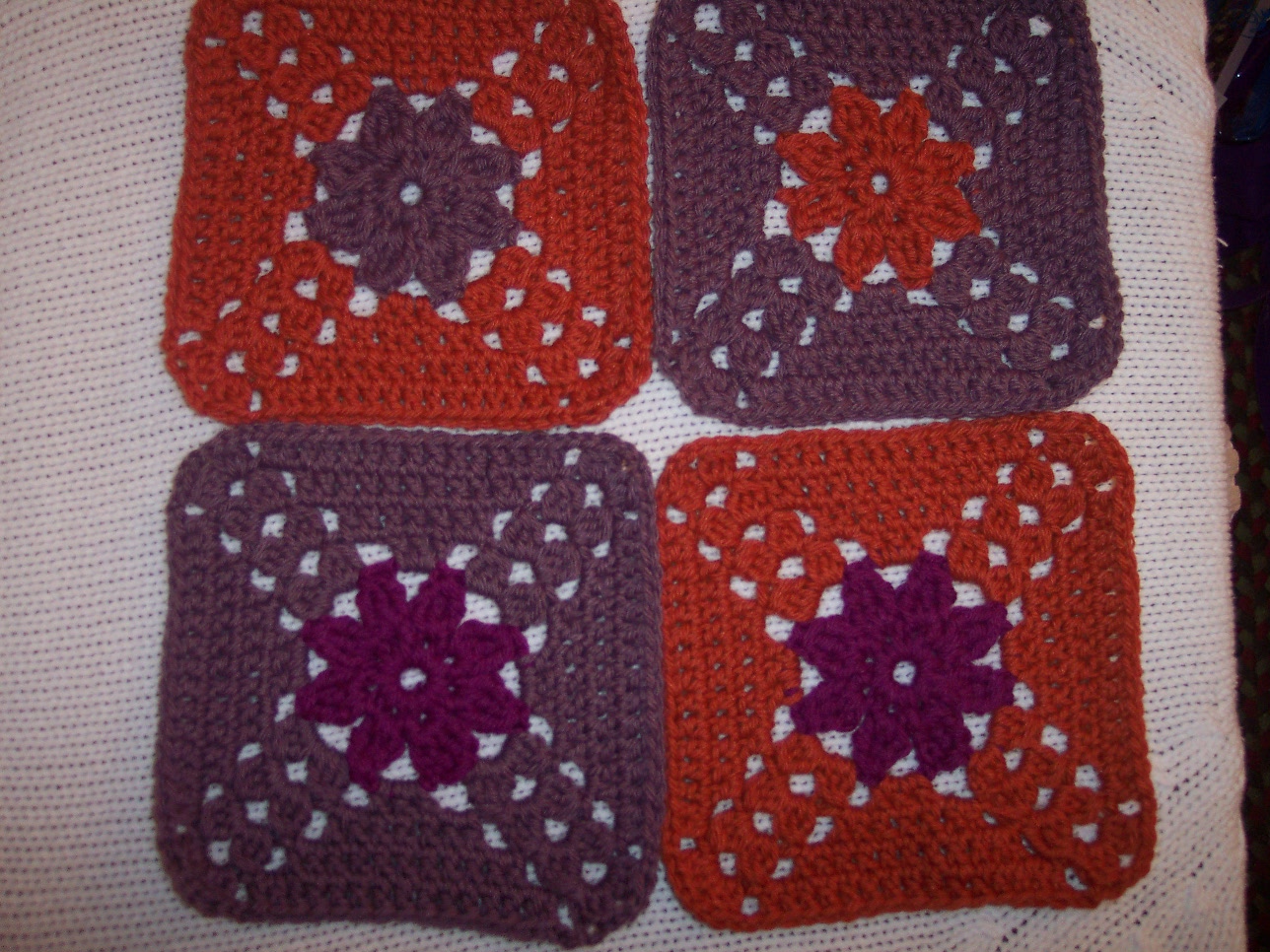
My favorite thing about granny squares is that you can combine the most hideous colors and no one even blinks. I don't know why that is, but it's true. Granny squares exist in an alternate universe where the standard rules of beauty don't apply. Which is not to say that there aren't some arrestingly beautiful squares out there, too. I'm just not skilled enough yet to make them. Give me a minute. . . .
***
I started Wolf Hall, but I finally had to admit to myself that I just do not give a flip about sixteenth-century political intrigue. I also have a hang-up about historical novels. I love them as long as they place fictional characters inside real events, but when you start trying to fictionalize real people, I get antsy. Did that really happen? Is that what she would've said? And I start to resent Mantel coming along 500 years after the fact and trying to impose some sort of artistic theme or meaning on the lives that Cromwell and Henry and Wolsey and Anne and Katherine and the rest were likely just trying to get through.
Mantel's an entertaining writer, though. If you don't have my historical fiction hang-ups and you do have at least a minimum level of interest in sixteenth-century English politics, please enjoy yourself. Me, I've started The Tiger's Wife, because I think I probably will give a flip about "mysterious circumstances surrounding [a] beloved grandfather's recent death." And I'm a sucker for a "stunning debut novel." And it's been sitting on the to-read pile since last year and I'm getting tired of blowing cat fur off it.
***
I finished a copyedit and started another, because that's how that goes.
***
I started two classes, one of which will be done in two more weeks, and another that's a full semester.
***
I started several walks.

Tuesday, January 22, 2013
Angst
You may think you have problems. You may think your struggles about jobs and kids and finances and flat tires and bad roofs and skunks living under your deck are the worst problems that could happen to a person. But you know nothing. Nothing, I tell you.
I can't decide what to knit.
I can't decide what to knit.
Should I start this purse?
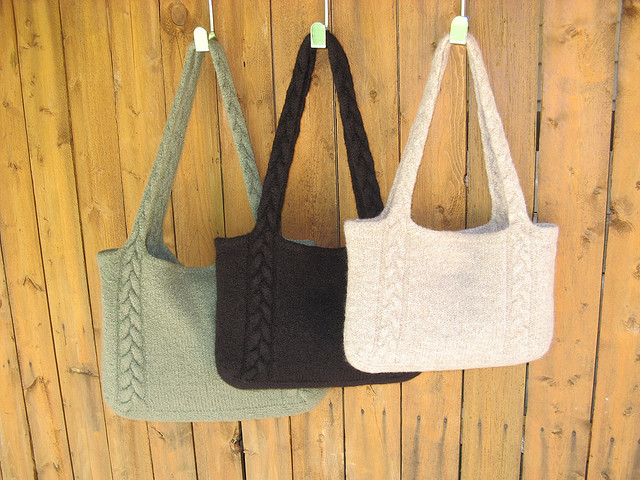 |
| Braided Cable Handle Tote by Amanda Silveira |
Or this hat?
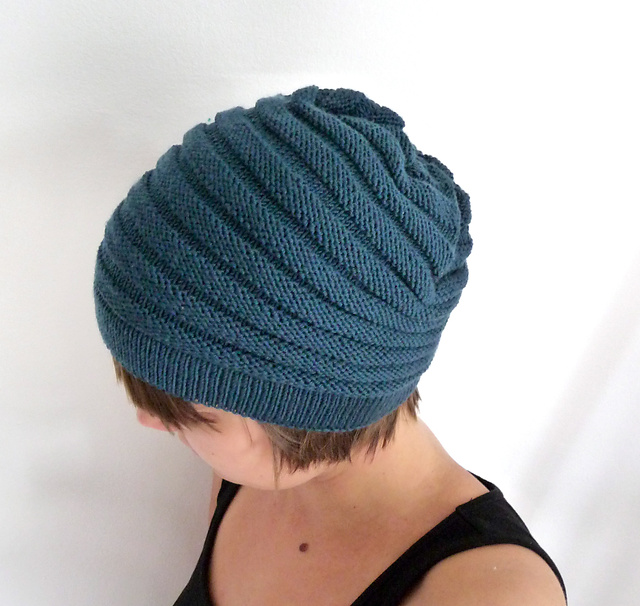 |
| Wurm by Katharina Nopp |
I bought the yarn for this cardigan . . .
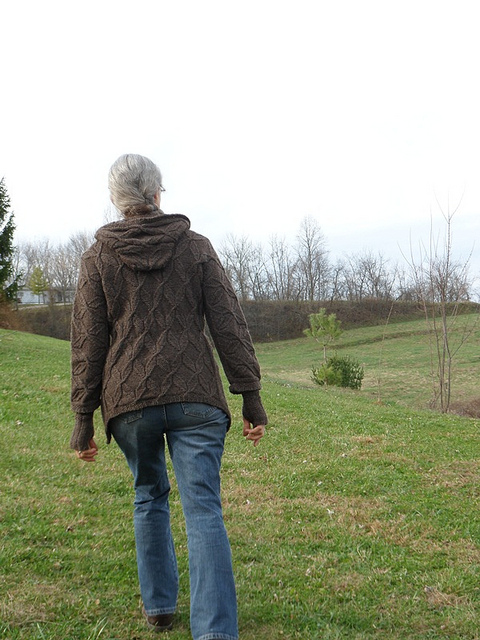 |
| Rimes the Reason by Jodie Gordon Lucas (Let's please not talk about how much it bothers me that the apostrophe is missing.) |
. . . but I swore to myself that I wouldn't start it until I finished this pullover . . .
 |
| Doreen by Berrocco Design Team |
. . . which is basically done except that I need to rip out the first sleeve
and make it longer, and finish the second sleeve in the first place, and
seam the shoulders and knit the neck, but I don't have the right-size
needles for the neck, and I don't want to buy them because I'll probably
never use them again, and then seam the whole rest of the sweater, and
really it's not looking good on wearing this one this year, even though
it's so close to done.
And lest you think I got tired of making socks, I need to turn the heel on my fourth pair of these socks so they can go back in my purse to be worked during car rides and long waits in restaurants, doctors' offices, grocery stores, and so on, because I can knit basically anywhere at any level of inebriation, but turning a heel is math and the rest of the world generally frowns on crazed knitters yelling, "Shut UP! I am trying to COUNT!" at the frightened diners at the next table.
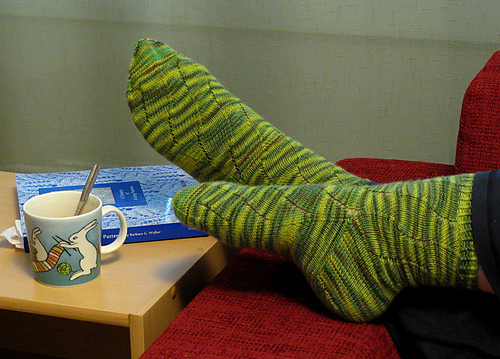 |
| Sunday Swing Socks by Krystal Nyberg |
Oh, and then of course there's paying work like grading papers and editing and such that needs to get done, too. So you can see my dilemma.
Monday, January 14, 2013
Reading Journal: Arcadia
I couldn't sleep last night, so finally had the time to finish Arcadia (Lauren Groff, Voice Publishing, 2012).
It took me an unforgivably long time to figure out what Arcadia is about. The plot centers around a 1970s commune in up-state New York, as seen through the eyes of the first child born into the group, Bit Stone. Bit observes as the community at first thrives, then disintegrates when it becomes too heavy to support its own weight. The book concludes 40 or so years later, in a near-future dystopian landscape of virus pandemics and an irreparably damaged ecosystem. It's an engaging read simply as a narrative about community.
But what Arcadia is about finally hit me in a scene in which Bit, who has grown up to be a photography professor, is talking with a student who wants an A but has received an A-. Bit tells her, "An A means perfect. I've never had a perfect student. Nobody is perfect." My reaction to Bit's statement was entirely mediated by my inner English teacher. I've seen other teachers' rubrics that require 0 typos and 0 grammatical errors to earn a perfect score; these requirements make me angry. A student who works hard, who demonstrates an understanding of the material, who has clearly grown through the completion of an assignment, does not deserve to have points docked for an isolated misplaced comma. I can think of no better way to discourage a student from a love of learning and writing than to insist on perfection. Bit's requirements for perfection are even more stringent, so stringent that it's literally impossible to meet them. And he knows that. He has set his students up to fail. This is when I lost my patience with Bit Stone, and understood what Groff was trying to accomplish in the novel: an exploration of whether perfection is really perfect.
Groff's answer is, I think, no. Bit tries and fails to build the perfect community and the perfect family. The tragedy, Bit would have us believe, is his failure to achieve perfection, the failure of the community around him to cooperate. The failure is the charismatic commune leader's tendency to issue undemocratic edicts and duck actual work, the community members' failure to understand how to support themselves, his mother's failure to will-power her way through her depression, and Bit's own failure to cure his mother of her sadness. But Groff's idea of tragedy is Bit's failure to appreciate the versions of perfection that do exist, the perfection in the way his community does function.
At the same time, Groff wonders how we know who we are. Are our own identities self-created, created by the perceptions of those around us, or innate? When teenage Bit leaves Arcadia with his parents, he finds himself undone: "The warp of stories that had always blanketed him, his personal mythology, was invisible, so nobody knew him; no one knew he was the miracle baby, Little Bit of a Hippie, Abe and Hannah's boy; . . . they didn't know anything at all." And if no one knows the mythology, who is Bit Stone? He's just Ridley Sorrel Stone, "named for a town we never did see," just as no one in the Outside can see Bit as he sees himself and expects to be seen.
Perfection, Groff leads us to conclude, is, like our own identities, self-created. Toward the end of the novel, Bit's mother, echoing the perspective Bit's has taken throughout, bemoans the fact that if Bit hadn't had to take care of everyone else, he could have been an artist. Unexpectedly, Bit answers, "I am an artist." That moment of self-identification and self-awareness shows Bit as he has grown to be, a person who can create his own perfection when he needs to, and can accept others as he finds them.
These are just a few thoughts on a very meaty novel. I haven't even mentioned Bit's wife, Helle, whose experience of Arcadia is the nightmare inverse of Bit's, or the role that irreversible climate change plays in enhancing the novel's theme. There's enough material in Arcadia for several seminar-length essays. But I'll spare you, and answer the one question you care about:
Recommended? Yes.
Subscribe to:
Posts (Atom)