Showing posts with label reading journal. Show all posts

Saturday, December 15, 2018

"Why Is This at All Important?"

My local library is running an informal Best Books of 2018 contest. Customers can vote on social media or drop their vote in a "ballot box" (i.e., a shoe box wrapped in craft paper). One anonymous commenter decided not to vote. Instead, he or she left a note asking, "Why is this at all important?"

The answer, of course, is that it's not one bit important! It's fun! 

I adore this time of year, when every media outlet with even the slightest literary pretension produces a list of the best five or ten or hundred books published in 2018. 

Thus I present for you a list of my favorite lists of the best books of 2018. Yes, a listicle of listicles. It's so meta, I can hardly stand myself. 

1. The granddaddy of them all is NPR's "Book Concierge," a 318-item list of books sortable into the standard genres, but also book club reads, short books, long books, "eye-opening reads," and some other unusual categories that make the list a fun way to wile away a half-hour--when you're not actually reading, of course.

2. The New York Public Library's list was curated by its staff (and was the inspiration for my local library's informal contest).

3. The Times Book Review chimes in every year with a great list. (That one might be behind a paywall if you've already used up your free views for the month.)

4. In a completely different list the New York Times book critics also pronounced on their favorites. (Also potentially behind a paywall.)

5. Slate, of course, has an opinion.

6. Slate also has an opinion about audiobooks.

7. PopSugar has the lighter fare covered. 

8. Once you get past the offers to join their recipe email list, Southern Living has a great list of choices curated from independent bookstores.

9. LitHub is probably my favorite literary website, and their mostly unique list is probably my favorite, as well. 

That's a lot of lists to sort through. If you're not in the mood, here are a few books that show up on at least three lists. 

Calypso, by David Sedaris
Circe, by Madeline Miller
Frederick Douglass: Prophet of Freedom, by David W. Blight (nonfiction)
I'll Be Gone in the Dark, by Michelle McNamara (nonfiction)
The Mars Room, by Rachel Kushner
Milkman, by Anna Burns (just won the 2018 Man Booker Prize)
There, There, by Tommy Orange
Transcription, by Kate Atkinson
Washington Black, by Esi Edugyan

After combing through all these lists, I'm most excited to read My Sister, the Serial Killer, by Oyinkan Braithwaite. And I guess probably There, There, just because it showed up on almost every list and I want to decide for myself if it's worth the fuss.

Et tu? Have you added anything to your TBR pile because it showed up on a Best-Of list? 

Wednesday, August 29, 2018

Reading Is Fundamental

June 5th. The last book I finished was All the Light We Cannot See, and according to Goodreads, I finished it on June 5th.

It's not that I haven't been reading in all that time. I just haven't finished anything. Americanah, Record of a Spaceborn Few, Women Heroes of World War II, and a Obama-Biden bromance parody called Hope Never Dies are just some of the books I've started and haven't managed to finish. I intend to finish all of them so I guess technically I'm reading four books at once? Sounds impressive, except I'm not actually reading any of them. I've moved on to another one called Dietland, recommended by a friend. It's promising. I might finish it!

Reading slumps are a thing, y'all. But if you think that's going to stop me talking about books . . . well, you haven't been paying attention. I follow a blog called Reading Every Night (mainly because it's such a great blog title) and she just did a post on the top ten books she "learnt" something from. (Those silly Brits and their "English.") Great idea! Here are mine in no particular order:

1. I read Adventures of Huckleberry Finn for the first time in middle school. It taught me that I could read and enjoy "hard" books. At the time, it was the longest book I'd ever read and slogging through the dialect was no joke. I've reread it several times since and practically minored in Huck Finn analysis in college. Go on, ask me something. 

2. That Godless Court by Ronald Flowers and Religious Liberty in a Pluralistic Society edited by Michael Ariens and Robert Destro were the textbooks I used in a religion and the Supreme Court class in grad school. I learned more about how our country functions (or doesn't function) in that single semester than in a lifetime of listening to grouchy relatives bellyaching at the dinner table. Listening to Nina Totenberg read Supreme Court transcripts is now my favorite part of NPR. Also? Antonin Scalia was terrible at his job. Awful.

3. When an undergrad lit class assigned Emma, I rolled my eyes so hard they almost popped out of my head. Some how, some way, in all my young-adult certitude, I had become convinced that Jane Austen was just a fluffy romance writer. Yes. I know. I am properly ashamed. I wasted no time making up for my error, though, and had a difficult time concentrating in my last semester of college because I was too busy reading her entire bibliography, which taught me how far we've come and how far is left to go.

4. True Grit (Charles Portis) taught me that Westerns could also be literature.

5. The Dispossessed (Ursula LeGuin) taught me that Science Fiction could also be literature.

6. "A Worn Path" (Eudora Welty, short story) taught me that stories could be as delicate and nuanced as a Da Vinci painting. It's the story that made me an English major and set me on my path.

7. The Sherlock Holmes stories taught me that just because an author or book is canon doesn't mean it can't be critiqued.

8. Dog Songs (Mary Oliver) taught me what I've suspected all along: Dogs are worthy of poetry.

9. The People in the Castle (Joan Aiken) taught me that grownups should read fairy tales, too.

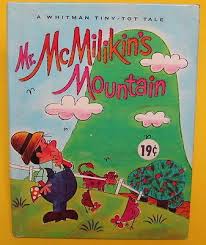
10. Mr. McMilikin's Mountain taught me that parents get tired of reading the same stories over and over but they'll do it for you anyway.


That's just a random sample of some of the books that have influenced me. And you? What books have taught you an unexpected lesson?

Friday, January 26, 2018

And the Best Books I Read This Year (2017)

Yup, that's all this blog is now: annual reviews of the books I liked the best. Sorry I haven't been posting, promise to do better, blah, blah, blah, nobody cares.

So let's get to it. Based on the "would I re-read it" premise, the list is pretty small, so stay tuned for some honorable mentions at the end.

Aiken, Joan. 1963. The Wolves of Willoughby Chase.
Last year I was entranced by The People in the Castle, and this year I read and loved several of Aiken's children's books. Somehow I missed these books when I was the "right" age, and that is a bit of a tragedy; the spirit of adventure embodied in Aiken's stories would've done my childhood good. I'll go beyond saying I "would" re-read it to promise that I will re-read it with my niece when she's old enough.

Chambers, Becky. 2014. The Long Way to a Small, Angry Planet. 
I don't seek out much sci-fi and actually picked this up thinking it was something else. What a serendipitous mistake! The story, full of space adventures and imaginative tech, is entirely character driven and addresses intense themes of belonging. And it's well written and just a lot of fun. As soon as I finished Long Way, I immediately read the sequel, A Closed and Common Orbit, which follows characters who were tangential to the first story. I've already placed my library request for the third in the trilogy, Record of a Spaceborn Few, which is scheduled to be released in July 2018.

Dickey, Colin. 2016. Ghostland: An American History in Haunted Places.
Dickey approaches American history and culture through our most famous hauntings. He manages to debunk many of our favorite ghost stories but still creep me out anyway!

And that's it. Those are the three books I read in 2017 that I would willingly re-read if suddenly new books ceased to appear.

Here are the honorable mentions I really enjoyed but that don't make the re-read list. Oddly for me, these are all nonfiction. What? Nonfic? No, yes, really. 

Waldman, Ayelet. 2017. A Really Good Day: How Microdosing Made a Mega Difference in My Mood, My Marriage, and My Life. 
The drug war is dumb and prevents people from accessing help that could change their lives.

Winter, W. Chris. 2017. The Sleep Solution: Why Your Sleep Is Broken and How to Fix It. 
I have a secret weakness for self-help books, and sleep is something I have worried about a lot in my eternal quest to become bigger, stronger, faster without having to do anything boring or dumb like exercise or eat well or change my lifestyle in any way. The Sleep Solution gets into the nitty-gritty of how sleep works, but does so in accessible language. The book changed my perception of sleep and I actually became more satisfied with my sleep the very week I finished it. (On a slightly bizarre note, on GoodReads I mildly criticized the author's habit of inserting jokes as footnotes, thereby interrupting himself over and over and over for no good reason. The author responded personally to defend his choice, which was . . . odd. You'd think an internationally known sleep doctor would have better things to do with his time than stalk GoodReads reviews.)

Yang, Kao Kalia. 2008. The Latehomecomer: A Hmong Family Memoir. 
The Latehomecomer was the 2017 Big Read selection for the Wichita Public Library. Many of my co-workers didn't love this book as much as I did. I was particularly struck by the fact that Yang and I are close to the same age. While I was running around the playground at OK Elementary, she was running around a refugee camp. Our grandmothers even died within a month of each other. So I felt a particular interest in and affection for Yang's well-told story.


Friday, December 30, 2016

The Best Books I Read This Year

This has really been a banner year for good books. Am I getting better at choosing? Are my tastes expanding? Probably yes.

To choose these books, I went through all my 2016 GoodReads reviews asking myself if I would re-read that book. I don’t re-read very often, but, in the unlikely event that authors stopped writing new books and I got caught up on all the books ever published and had literally nothing else to read, these are the books I would happily read again. These are also the books I try to push on friends and library patrons whenever possible. (Seriously. I sent a woman home with Ghost Summer just last week. I’ll consider it a personal affront if she doesn’t enjoy it.) They’re listed in alphabetical order by author; no ranking is implied. I read the books this year, but most of them were not published in 2016.

Aiken, Joan. 2016. The People in the Castle.
Aiken died in 2004 before I had ever even heard of her. Luckily for me, her daughter repackaged and republished some of her short stories as The People in the Castle, which got written up on some blog or website or other, and I had a chance to discover her unique, beautiful fairy tales. I’m looking forward to working through her immense bibliography.

Due, Tananarive. 2015. Ghost Summer.
Ghosts stories, people! GOOD ghost stories! And monster stories and human stories and human-monster stories. If you like your literature with a side of creepy, dive in.

Jackson, Shirley. 1962. We Have Always Lived in the Castle.
Shirley Jackson. That is all I have to say. Oh, except for: Thanks, Milton, for reminding me I had been meaning to read this.

Kingsolver, Barbara. 2009. The Lacuna.
Reading about Stalinist Russia and the American anti-Communist hysteria of the 1950s at this particular political moment was grounding. Recalling these eras in history has reminded me that nothing we are going through now is new; there have always been people who tried to enforce one particular way of being American. Pluralism is a luxury we are frequently not allowed to enjoy. And Kingsolver is always good.

Mandel, Emily St. John. 2014. Station Eleven.
I dig stories about how people cope with the end of “civilization.” This one is particularly good.

Yapa, Sunil. 2016. Your Heart Is a Muscle the Size of a Fist.
Tells the story of the 1999 WTO protests in Seattle from the perspective of the protestors, the officers, and a diplomat.

Honorable Mention
I particularly enjoyed these, but they’re not “re-readable.”

Bradbury, Ray. 1953. Fahrenheit 451.
Butler, Octavia. 1979. Kindred.
Hernandez, Carlos. 2016. The Assimilated Cuban’s Guide to Quantum Santeria.
Hugo, Victor. 1862. Les Miserables.
Nguyen, Viet Thanh. 2015. The Sympathizer.
West, Lindy. 2016. Shrill: Notes from a Loud Woman.

Sunday, September 15, 2013

Reading Journal: Burial Rites

Hannah Kent's first novel, Burial Rites, was published this month by Little, Brown. I don't remember reading an early review or putting it on my holds list, but I must've done both, because it showed up in my box last Wednesday.

Once I had a chance to flip through it, I decided I wasn't going to like it. It's a fictionalized account of the months leading up to the 1830 beheading of Agnes Magnusdottir, the last person ever to be executed in Iceland. It uses available documentary evidence to provide the rough outline of a detailed story purporting to explain the circumstances surrounding Agnes's crime, the murder of the landowner for whom she worked as a servant. Using the character of a priest to draw out the story, Kent provides a fairly explicit and yet hum-drum view of the lives of poor women in nineteenth-century Iceland, which, of course, were no less difficult than the lives of poor women in any other part of the world in that era.

In other words, the conceit is identical to that used by Margaret Atwood in the brilliant Alias Grace, the story of a 19th-century Canadian servant sentenced to death for murdering her master. It's pretty audacious to blatantly imitate one of our greatest living authors, and I expected Kent to suffer in comparison.

I shall now eat my words.  

Kent's writing has a ways to go before she reaches Atwoodian levels of virtuosity, but her story telling instincts more than make up for it. In any case, Kent's straight-forward, one might say plain, style does service to her characters, people who, though literate and intelligent, live lives much too difficult and exhausting to engage in artistic pursuits that don't serve some useful purpose on the farm.

I found myself drawn into the details of running a farm in pre-Industrial Revolution Iceland, a climate an outsider might find much too forbidding to be worth the effort. From the window pane made of a pig bladder to the sleeping arrangements in the badstofa, Kent, herself an Australian, provides realistic but not excessive detail of what it meant to live and farm in a region where the weather can kill you 9 months out of the year.

And, more urgently, Kent tells the story that could belong to any poor woman servant from any era, including our own, subject to the whims of her "betters" and unable to fully act on her own desires and needs. The danger of stories like Burial Rites and Alias Grace is the temptation to classify these stories exclusively as horrors from the past. "That doesn't happen now," we tell ourselves. Yet of course it does. The bare fact of poverty in the 21st-century United States puts one at risk of victimization and exploitation; the risks for poor women are double. So when we read novels like Burial Rites, although it's oh so tempting to classify it merely as historical fiction, Agnes herself begs us to examine our own world in search of injustice and exploitation that, though perhaps better camouflaged, is no less prevalent. This is where Kent's novel truly succeeds.


Thursday, July 4, 2013

Here There Be Monsters, Y'all! No, really.

I've discovered the solution to the tepid second novel that critics' lore insists a promising young novelist will inevitably produce. Just wait and read the second novel first, and then go back and read the first. Earlier this year I read Arcadia, Lauren Groff's second novel. It was good. Darn good, in fact. So good it was one of the contenders in the Tournament of Books.

But I just finished The Monsters of Templeton, Groff's debut novel published in 2008, and it blew Arcadia right out of the water. Monsters has, well, a monster. A real one. We're not talking some metaphoric mental monster, but an actual, honest-to-god, lives-in-the-lake, and may-or-may-not-be-drowing-people monster.

And yes, okay, the monster is in fact symbolic of the monstrous secrets being kept in the town that surface at the same time as the monster. It wouldn't be lit-rah-cha if there wasn't any symbolism, of course. But Groff took what could've been an average novel on well-worn themes (daddy issues much?) and pulled the story-telling equivalent of lifting a rabbit out of a top hat. Except the rabbit isn't a boring old rabbit. It's a monster. A real, live monster, "huge, a heavy cream color that darkened to lemon in places. . . . It looked like a carp grown enormous, with a carp's fat belly and round eye, but with a long, articulated neck like a ballet dancer's and four finned legs, plump as a frog." When was the last time you got to read about a monster outside of a horror novel? Never, yeah?

On more, shall we say, traditional grounds, the novel is just as skilled as Arcadia. It looks at similar themes in terms of what constitutes a family, how perceptions and knowledge are formed, and what happens when a new reality intrudes. The main character, Willie Upton, searches her family's history to reveal her own "monsters," which for the most part aren't that monstrous, but really are only the departures from "authorized" history that happen in every family. As Willie explores her family's history back to her founding ancestors in the 18th century, Groff explores the quintessential American family in microcosm, and thus presents us with a portrait of our own American geniture. Although Willie is the protagonist who must live with the consequences, Groff lets each generation tell its own story and make its own confessions. Each generation's story is layered on another, not necessarily in chronological order, creating new understandings of what it means to be Willie Upton, and, for the rest of us, what it means to be a descendent of the American experiment—although that really sounds too grand for the immediate, intimate nature of this story.

As in Arcadia, Groff's prose is impressive. It manages to be exquisite and delicate without looking like she tried to make it exquisite and delicate. In the course of the week or so that I was reading Monsters, I found myself thinking in Groff's voice, the way you do when you're engrossed in a novel. Letting an author infect my brain like that is probably the highest praise I can give any writer.

So you must definitely read The Monsters of Templeton, not least because it is a relevant story told in beautiful prose. But mostly you must read Monsters because of the monster. How often as an adult do you get to read about a monster you can really believe in?

Oh, and the friendly if somewhat anal-retentive ghost. Did I mention the ghost? I can't believe I forgot to tell you about the ghost!

Friday, June 14, 2013

Because the hell-hound is adorbs.

You've read Good Omens: The Nice and Accurate Prophecies of Agnes Nutter, Witch, right? You know, the comedic novel about Armageddon that Neil Gaiman and Terry Pratchett coauthored and published 23 years ago? You've read that, right? I assume pretty much everyone except me has read it, and I just finished it, so I assume now everyone's read it.

But if for some reason you haven't gotten around to it yet, here are some reasons you might enjoy it:
  • Gaiman and Pratchett apparently loathe Queen as much as an approaching-middle-aged Midwestern woman—that is to say, me.
  • The vicious hell-hound sent from the underworld to accompany the preadolescent Antichrist has no choice but to become a lovable family pet—or else the Antichrist's dad won't let him keep it. "It had always wanted to jump up at people but, now, it realized that against all expectation it wanted to wag its tail at the same time."
  • It's got a lot of Sunday Morning theology beat (and Friday Night and Saturday Afternoon, for that matter). The young Antichrist wonders, "I don't see what's so triffic about creating people as people and then gettin' upset 'cos they act like people." Yeah, me neither.
  • An entire room of telemarketers is consumed by a huge demonic maggot consisting of millions of tiny demonic maggots. Seems okay, yeah? 
  •  A witch being burned at the stake manages to blow up her entire village in the process. Serves 'em right.
  • The Antichrist is unusually practical for an 11-year-old, not to mention astonishingly polite: "I don't want any more world than I've got. Thank you all the same."  
 
Here are some reasons you might not enjoy it:
  • There are so many references to Queen that you'll catch yourself singing "Scaramouche! Scaramouche! Will you do the fandango?" under your breath to yourself at least twice. And then you'll probably have to pay royalties to BMI or somebody.
  • That's really all I've got. 

Tuesday, June 11, 2013

Next Stop: Amish Romance Novels

Letting your reading life be determined by your library holds queue makes for an interesting, if sometimes disconcerting, reading experience. There I was taking a leisurely and enjoyable stroll through Good Omens: The Nice and Accurate Prophecies of Agnes Nutter, Witch, when NOS4A2, a story by Joe Hill about a vampire named Manx who feeds on children, showed up. It's a new release and therefore a two-week checkout with no renewal, so I dropped Agnes and found myself speeding down inscape highways and through mysterious covered bridges with Vic "Brat" McQueen as she tries to rescue her son from the evil Manx and his dominion, Christmasland. Talk about whiplash.

I can't say I particularly enjoy gruesome horror stories anymore, and certainly don't normally seek them out. But I had read an article about Hill and NOS4A2, and was curious enough to give it a shot. I wasn't going to beat myself up if I didn't finish, though. 

But here's the thing: Joe Hill is an excellent storyteller. It might be in his genes, since his dad is Stephen King. It's clear that Hill learned his craft by reading and re-reading and re-reading his dad. Would the similarities of style and tone have occurred to me if I hadn't known about the relationship? Probably. It really is very "Kingish." Hill acknowledges as much when he writes in the acknowledgments of "cruising [King's] back roads my whole life," and even said in an interview that he thought "it would be fun to goof on Stephen King a bit."

And here's another thing: Hill is better than his dad—or at least, shall we say, fresher. It's sort of like the difference between drinking the same iced tea you've been drinking your whole life, which is perfectly fine, and drinking raspberry iced tea with lemon—the same, but better, if you like that sort of thing.

But here's a third thing: The horrifying bits, unfortunately, are pretty much rote. You know in a book like this there's going to be a pretty fair amount of gore for anyone who inadvertently crosses Manx's path. And there is. When a dog is introduced midway through, you just know that dog isn't going to make it out alive, and it's probably going to be a pretty gruesome death. And it is. And that's where I lose patience. Yes, because it's a dog, and it shouldn't be any secret how I feel about thinking mildly hard-hearted thoughts about an animal, let alone actually hurting one, but also because there's plenty of real-life horror all around us, and fictional horror feels less like an escape and more like something that shouldn't be permitted to take up anymore space in my brain than absolutely necessary. That guy in Cleveland who kept those three women locked up for years? There's a child-eating vampire for you.

So, yes, Hill is a helluva writer and a helluva storyteller. By all means, check him out if you haven't already. I'm glad I did. But in general, although I'm not quite to the point of taking up Amish romance novels for my escapist reading, I think I'm past wanting to read about bone mallets and intestinal gristle for fun on rainy Sunday afternoons.

Thursday, April 25, 2013

Reading Journal: The Good, the Bad, and the . . . let's just stop there.

Earlier this week I returned The Night Circus to store even though I was only about halfway through it. I was so disappointed. Everyone seemed to love it so, and I thought I would love it, but given that it took me two months to read 214 pages and there were still 170-some pages to go, love does not seem like the thing that was happening.

Morgenstern tried so hard to make the story elegant that it became nothing but caricature. It's supposed to be a battle between magicians, which sounds a lot more interesting than Morgenstern manages to make it—at least as far as I read. The illusions are too perfect, too intricate, the characters too exactly what you would expect of them. After a while the detailed descriptions of the magic contained in the circus become downright wearisome, and in the meantime I was longing to learn more about the characters outside their roles as performers. The only action I found compelling was Celia's refusal to let her father change her name. That happened on p. 11. I read 203 more pages waiting for someone to do something admirable and/or interesting. Yes, there's lots of magic and illusion, and it's all "Interesting," but none of it is actually interesting.

Sometimes I have to remind myself that I get paid to read textbooks and student essays. No one is paying me to read novels, so when I'm reading "off the clock," as it were, I have the right to enjoy it. So I gave myself a little mental shake, retrieved my favorite bookmark, and back to the library it went.

Turns out I dropped Circus at exactly the right time because Where'd You Go, Bernadette, by Maria Semple, happened to show up in my holds queue the very same day. (If you've already read it, visit the link just for the doll. I am going to need a Bernadette doll.)

Bernadette is everything Circus is not. Primarily that consists of being believably unbelievable, with characters who are loveable because they are interchangeably flawed and redeemable, sometimes one or the other moment to moment, usually both at the same time. The story of a misanthropic, semi-agoraphobic* famous architect and her family is constructed through a series of e-mails, memos, transcripts, articles, and other electronic ephemera. It looks like the stack of research someone getting ready to write a book would compile, not the book itself, and at first I thought that conceit would drive me batty, but I wound up sinking right in. It's an excellent way to execute sudden shifts in point of view. In fact, when Semple switched to traditional first-person narration at the end, it was a little disconcerting. It was the only off-note in what I am unashamedly calling a symphony of awesome.

Okay, I'll admit the ending of Bernadette is maybe not the most believable denouement in all of literature, but it works because you want it so, so badly. I was prepared for the story to end in the predictable, practical way. I would've understood. But when it took that one final twist, I was so pleased and excited that I literally gasped aloud. Bertie Sue, who is offended by all unexpected noises, even relatively quiet ones, woke up and gave me the glare of death. I'm seriously thinking of proposing her as the library mascot. Having been suitably chastised, I finished the rest of the book wearing a huge (silent) grin.

So, to conclude, The Night Circus: Skillful writing, really boring plot—or more probably an interesting plot poorly executed. If you're really into magic, read it just for the descriptions of the circus; otherwise, skip it and reread Jonathan Strange and Mr. Norrell instead. Where'd You Go, Bernadette: Read it. Do you hear me? Read it!

*Yes, yes, I know.  

P.S. I had forgotten that Bernadette was one of the contenders in the 2013 Tournament of Books. That's how it made it onto my reading list in the first place. It lost its round to The Orphan Master's Son, which ultimately won the tournament. I suppose I'll have to it read now, though it doesn't sound like near as much fun.


Sunday, April 21, 2013

The Point

A week or two ago I read Mr. Penumbra's 24-Hour Bookstore. It's a generally pleasing if somewhat meandering story set mostly in a mysterious vertical bookstore. But for about two pages, it became more than pleasing; it became magic.

When the story finally wound its way toward its focus, a secret society that appears at first glance to be devoted to books, I almost dropped Penumbra in the bathwater (the bath being where I do all my best reading). Suddenly I was not just interested, but entranced. It was no longer enough just to live the characters' lives along with them for as long as I could stand the hot water. I was now so engaged in the story that I was momentarily convinced that I, too, must found a secret society dedicated to the glory of the book! I found myself inspired to become part of the story in a way I have not been inspired since I was a kid. Of course turning the page brought disappointment. It turns out the society wasn't so much dedicated to books as to gaining immortality, with books simply the tool. Why would anyone want to be immortal? Blech.

But for that two-page moment, I was thrilled, plotting my own society. For a moment, my life seemed different. That's a feeling I remember from so long ago. The stories I read as a kid could capture me, and the fact that I couldn't pull the characters and their experiences off the page—or dive in with them—was almost anguish.

So when I read that bit in Penumbra, it struck me almost like a scent-memory, the same way that walking into my house in the winter and smelling the gas space heater in the basement invariably makes me think of my grandparents' house, or how the scent of rubbing alcohol gives me the shivers even though the nearest nurse brandishing a hypodermic is miles away, and I'm not scheduled to pay her a visit for months.

The first book that sprang to mind was From the Mixed-Up Files of Mrs. Basil E. Frankweiler, by E.L. Konigsburg. I have never wanted to live inside any story quite so much as I wanted to live with Claudia and Jamie in the New York Metropolitan Museum of Art. When I heard yesterday that Mrs. Konigsburg had died, I started thinking about that feeling, and wondering when I would experience it again. Penumbra is the first time I can remember feeling it, however briefly, as an adult. But as a child it was almost commonplace.

I wanted to journey toward Digitopolis with Milo, live in a boxcar with the Boxcar Children, get a group of friends to start our own business like the girls in the Babysitters Club, hang out with Turtle Wexler while we solved the mystery of Sam Westing's death, and rescue and raise a runty piglet just like when Fern saved Wilbur, among other adventures.  

For me the highest purpose of reading, beyond edification or self-improvement, is to simply become someone else for a little while. Occasionally one runs across folks who sneer that they don't read fiction because it isn't real. What, they ask, is the point? Poet John Ciardi answered that question so much more eloquently than I ever could: 
For a great book is necessarily a gift: it offers you a life you have not time to live yourself; and it takes you into a world you have not time to travel in literal time. A civilized human mind is, in essence, one that contains many such minds and many such worlds. If you are in too much of a hurry, or too arrogantly proud of your own limitations, to accept a gift to your humanity some pieces of the minds of Sophocles, of Aristotle, of Chaucer—and right down the scale and down the ages to Yeats, Einstein, E.B. White, and Ogden Nash—then you may be protected by the laws governing manslaughter, and you may be a voting entity, but you are neither a developed human being nor a useful citizen of democracy.
That's the point.

What characters would you bring to life if you could? All recommendations welcome!

Monday, March 18, 2013

Reading Journal: Quiet: The Power of Introverts

I celebrated St. Patrick's Day by shooting a lot of green stuff out of my nose. In the midst of being unfit for anything else, I had time to finish the second half of Quiet: The Power of Introverts in a World That Can't Stop Talking, by Susan Cain (Crown, 2012).

It's no surprise to me or anyone who has known me for more than a minute that I'm an introvert. After all, in the face of student loans and a mortgage I voluntarily quit an office job, which had me sitting almost directly in a traffic pattern and being interrupted every few minutes, to start the rather risky enterprise of freelance copyediting from my home office, where I could go weeks without ever talking to anyone besides my family and the clerk at the grocery store if I wanted to.

So enjoying a book that celebrates the introvert is obviously well within my wheelhouse, but I wasn't quite expecting to read a book that explained me to myself so clearly. Amid the discussion of brain chemistry and magnetic resonance imaging scans, the takeaway is that one-third to one-half of the population is like me. We enjoy parties as much as the next person, but we're likely to get tired and go home sooner. Public speaking may or may not cause abject terror, but regardless of whether we feel stage fright (I usually don't), we are more likely than our extrovert counterparts to plan our remarks ahead of time--which explains why I type out a full script every time I have to make a 30-second announcement in church. If we have jobs that require lots of interaction with co-workers and the public, even if we love and are passionate about what we do, we're likely to want nothing more at the end of the day than to be left alone to hibernate.

And whoever said planning ahead and a little judicious hibernation are bad things? I didn't pick up Quiet expecting a self-help book, but I did find validation for the way I prefer to approach the world as well as suggestions for how to make my, um, quiet approach more efficient and effective. In addition to the positive introvert attributes like the tendency to plan ahead and to work longer to solve problems before giving up (can you say stubborn?), Cain discusses the value of developing extrovert-style skills for particular, limited situations--and somehow that's easier to take when you're given permission to come home at the end of the day and be as quiet as you like. But she also emphasizes that extroversion as a personality type is in no way superior to introversion. Extroverts need to learn to channel their inner introverts as well, she argues. Enron and the 2008 Wall Street meltdown? You can thank the extroverts, with their tendency to accept the ideas of the person who speaks persuasively rather than intelligently, for that.

As for me, it was when I started working from home that I began to genuinely enjoy socializing. When I worked by myself all day, I found that rather than being drained by the end of the day, I was energized. The idea of facing a group of human beings didn't, for maybe the first time ever, make me feel slightly nauseated. Almost without noticing, I was suddenly a member of a knitting group, a church, a book group, a committee. And what's more, I enjoyed it! I had more commitments than I've ever had in my life, and instead of feeling overwhelmed and put-upon, I loved it.

In the last few months, my work situation has changed again. I've taught more on-campus classes recently (and I've never "performed" more energetically than when trying to keep a roomful of eighteen-year-olds engaged in grammar and composition), and that has drained a lot of energy and affected my social life. I've pretty much stopped participating in anything I'm not obligated to do partially because my work schedule has been so full, but also largely because the idea of sitting in a group of people and being expected to make conversation seems so exhausting. Now I've started a part-time job that has a good mix of time spent working with the public and time working behind the scenes on my own, plus a staff that genuinely values each others' need for a little quiet time on break. The unique thing about this crowd is that they respect the power of the book--if you're reading, they don't interrupt! I hope this job will complement my freelance work and teaching (online for the next two semesters), and make it possible for me to rejoin the world.

A friend recently asked me if I'm ever going back to knit night, and I gave her a flip answer that I don't remember now. The real answer is, I hope so. That part of my life is valuable. But I have to find a good work-life balance with plenty of down time to both work and play on my own. Being "in the world" is worth the energy it uses, but introverts like me can't do it without a reserve of energy to use in the first place. The beauty of Quiet is Cain's validation that, even in the midst of a culture that values the extrovert ideal above all else, my approach has been right for me all along.


Monday, January 14, 2013

Reading Journal: Arcadia

I couldn't sleep last night, so finally had the time to finish Arcadia (Lauren Groff, Voice Publishing, 2012).

It took me an unforgivably long time to figure out what Arcadia is about. The plot centers around a 1970s commune in up-state New York, as seen through the eyes of the first child born into the group, Bit Stone. Bit observes as the community at first thrives, then disintegrates when it becomes too heavy to support its own weight. The book concludes 40 or so years later, in a near-future dystopian landscape of virus pandemics and an irreparably damaged ecosystem. It's an engaging read simply as a narrative about community.

But what Arcadia is about finally hit me in a scene in which Bit, who has grown up to be a photography professor, is talking with a student who wants an A but has received an A-. Bit tells her, "An A means perfect. I've never had a perfect student. Nobody is perfect." My reaction to Bit's statement was entirely mediated by my inner English teacher. I've seen other teachers' rubrics that require 0 typos and 0 grammatical errors to earn a perfect score; these requirements make me angry. A student who works hard, who demonstrates an understanding of the material, who has clearly grown through the completion of an assignment, does not deserve to have points docked for an isolated misplaced comma. I can think of no better way to discourage a student from a love of learning and writing than to insist on perfection. Bit's requirements for perfection are even more stringent, so stringent that it's literally impossible to meet them. And he knows that. He has set his students up to fail. This is when I lost my patience with Bit Stone, and understood what Groff was trying to accomplish in the novel: an exploration of whether perfection is really perfect.

Groff's answer is, I think, no. Bit tries and fails to build the perfect community and the perfect family. The tragedy, Bit would have us believe, is his failure to achieve perfection, the failure of the community around him to cooperate. The failure is the charismatic commune leader's tendency to issue undemocratic edicts and duck actual work, the community members' failure to understand how to support themselves, his mother's failure to will-power her way through her depression, and Bit's own failure to cure his mother of her sadness. But Groff's idea of tragedy is Bit's failure to appreciate the versions of perfection that do exist, the perfection in the way his community does function.

At the same time, Groff wonders how we know who we are. Are our own identities self-created, created by the perceptions of those around us, or innate? When teenage Bit leaves Arcadia with his parents, he finds himself undone: "The warp of stories that had always blanketed him, his personal mythology, was invisible, so nobody knew him; no one knew he was the miracle baby, Little Bit of a Hippie, Abe and Hannah's boy; . . . they didn't know anything at all." And if no one knows the mythology, who is Bit Stone? He's just Ridley Sorrel Stone, "named for a town we never did see," just as no one in the Outside can see Bit as he sees himself and expects to be seen.

Perfection, Groff leads us to conclude, is, like our own identities, self-created. Toward the end of the novel, Bit's mother, echoing the perspective Bit's has taken throughout, bemoans the fact that if Bit hadn't had to take care of everyone else, he could have been an artist. Unexpectedly, Bit answers, "I am an artist." That moment of self-identification and self-awareness shows Bit as he has grown to be, a person who can create his own perfection when he needs to, and can accept others as he finds them.

These are just a few thoughts on a very meaty novel. I haven't even mentioned Bit's wife, Helle, whose experience of Arcadia is the nightmare inverse of Bit's, or the role that irreversible climate change plays in enhancing the novel's theme. There's enough material in Arcadia for several seminar-length essays. But I'll spare you, and answer the one question you care about:

Recommended? Yes.


Tuesday, December 4, 2012

An Ending I Did Not Like

In 2012, Gillian Flynn published her third novel, Gone Girl, and it got a lot of press and was a really big honking deal. So when I accidentally left the house the other day without a book or knitting, and I had some waiting in line to do, Gone Girl was the novel I intended to pick up. But a paperback by the same author was sitting right there, and a paperback is cheaper and fits in your purse, so the decision was purely practical. All the best literature is reasonably priced and portable, right? Plus, whereas Gone Girl is about a marriage, something of which I have little knowledge and no experience, Dark Places is about a girl raised by a single mom in Kansas in the 1980s. I've got some personal stake in that story. And that's why I'm proffering my opinion about 3-year-old Dark Places instead of the newer novel.

I have to admit that I don't know the ins and outs of writing a "legitimate" book review. Maybe I should read a few, eh? But I cannot help but whine about how disappointed I was in Dark Places. The ending was so silly it verged on nonsensical. It's as if Flynn thought up a murder and wrote and wrote and wrote, and suddenly realized she didn't know how to solve it. So she figured out an answer that would fit the situation she had set up for herself--a ridiculous answer, but an answer--and then went back to an earlier chapter to toss in some foreshadowing and called it good.

Which is not to say that I didn't love Dark Places. I absolutely did, and that makes the disappointment all the more potent. That final nonsensical plot point aside, Flynn is a genius writer. Her characters are just like all those assholes you knew in school or at the bar. And they are all assholes to some degree, even the narrator. In other words, they're real people. Libby Day, now in her mid-30s, is on a quest to solve the murders of her mother and two sisters that happened when she was only 7 not because of a sense of duty or honor, but simply for money. She is not compelled to avenge her family; she is compelled to pay the rent. Otherwise, she'd just as soon stay in bed. (Frankly, I can relate to that, too.) A reader tempted to feel sorry for Libby won't feel that way for long. Having made a living on the pity people feel for her, Libby well understands the process of manipulation, but manipulation is not the purpose of Flynn's story. Libby's telling of her own life is straightforward and unflinching. Flynn never gives the reader a chance to indulge in the maudlin pity that a lot of writers wouldn't be able to avoid.

And that's why we love Libby. We know she's a manipulator, a thief of both unconsidered trifles and her supporters' sympathy, but she isn't stealing anything from us. In fact, she's giving us something--entry into her tightly controlled life. We also incidentally get a clear-sighted analysis of the worst possible scenario of 1980s rural poverty, alcoholism and addiction, absentee parenthood, the satanism-molestation panic, and even the farm crisis. Flynn reminds us that the 1980s had problems a lot bigger than mullets and parachute pants.

So even though the ending made me yell "That's so stupid!" I still loved Dark Places. A splendid novel isn't damned because of one flaw anymore than Libby herself is damned because of one horrid night.