In 2012, Gillian Flynn published her third novel, Gone Girl, and it got a lot of press and was a really big honking deal. So when I accidentally left the house the other day without a book or knitting, and I had some waiting in line to do, Gone Girl was the novel I intended to pick up. But a paperback by the same author was sitting right there, and a paperback is cheaper and fits in your purse, so the decision was purely practical. All the best literature is reasonably priced and portable, right? Plus, whereas Gone Girl is about a marriage, something of which I have little knowledge and no experience, Dark Places is about a girl raised by a single mom in Kansas in the 1980s. I've got some personal stake in that story. And that's why I'm proffering my opinion about 3-year-old Dark Places instead of the newer novel.
I have to admit that I don't know the ins and outs of writing a "legitimate" book review. Maybe I should read a few, eh? But I cannot help but whine about how disappointed I was in Dark Places. The ending was so silly it verged on nonsensical. It's as if Flynn thought up a murder and wrote and wrote and wrote, and suddenly realized she didn't know how to solve it. So she figured out an answer that would fit the situation she had set up for herself--a ridiculous answer, but an answer--and then went back to an earlier chapter to toss in some foreshadowing and called it good.
Which is not to say that I didn't love Dark Places. I absolutely did, and that makes the disappointment all the more potent. That final nonsensical plot point aside, Flynn is a genius writer. Her characters are just like all those assholes you knew in school or at the bar. And they are all assholes to some degree, even the narrator. In other words, they're real people. Libby Day, now in her mid-30s, is on a quest to solve the murders of her mother and two sisters that happened when she was only 7 not because of a sense of duty or honor, but simply for money. She is not compelled to avenge her family; she is compelled to pay the rent. Otherwise, she'd just as soon stay in bed. (Frankly, I can relate to that, too.) A reader tempted to feel sorry for Libby won't feel that way for long. Having made a living on the pity people feel for her, Libby well understands the process of manipulation, but manipulation is not the purpose of Flynn's story. Libby's telling of her own life is straightforward and unflinching. Flynn never gives the reader a chance to indulge in the maudlin pity that a lot of writers wouldn't be able to avoid.
And that's why we love Libby. We know she's a manipulator, a thief of both unconsidered trifles and her supporters' sympathy, but she isn't stealing anything from us. In fact, she's giving us something--entry into her tightly controlled life. We also incidentally get a clear-sighted analysis of the worst possible scenario of 1980s rural poverty, alcoholism and addiction, absentee parenthood, the satanism-molestation panic, and even the farm crisis. Flynn reminds us that the 1980s had problems a lot bigger than mullets and parachute pants.
So even though the ending made me yell "That's so stupid!" I still loved Dark Places. A splendid novel isn't damned because of one flaw anymore than Libby herself is damned because of one horrid night.
Showing posts with label TOIA Books. Show all posts
Showing posts with label TOIA Books. Show all posts
Tuesday, December 4, 2012


Wednesday, October 10, 2012
TOIA Ghost Stories
Stop with the lists already! There's the list of Nobel literature winners that I am emotionally invested in someday completing. (And the 2012 winner will be announced tomorrow. Eek! The suspense!) The National Book Award announced its list of finalists for 2012 this morning, and of course I should probably also read all the winners of the Pulitzer in fiction. At least that list only goes back to the 1950s.
And then there's Time Magazine's completely arbitrary--and sometimes bizarre--list of the 100 best novels since 1923. Are You There, God? It's Me, Margaret? Seriously? Okay, fine, yes, "We must, we must, we must increase our bust" was very influential for me. But of all the 20th-century YA novels in all the world, that's the one they picked? Really? It's like they realized at the last minute that less than a quarter of the authors on their list were women, and they thought that if they tossed us a book about menstruation, we wouldn't notice. So forget the Time list.
But still, that's a lot of reading. What's a girl with three jobs and a steady knitting habit to do?
Chuck it, that's what, and in honor of October, dive into some deliciously terrifying ghost stories.
A local bookstore advertised a pretty good sale last week, and so of course I ran right over to see what I could find. The display table at the front door had a great Halloween display, and The Big Book of Ghost Stories practically leapt into my hands. But I wasn't there to pay full price, so I put it back and wandered around the sale tables. Nothing appealed. In three tables of obscenely cheap books, I couldn't find one single thing I wanted, which has to be a lifetime first for me. Mysterious, right? Almost supernatural, one might say. And all the while, The Big Book kept calling me back, almost as if a mysterious presence wanted me to buy it.
Let's talk for just a moment about how I have never, ever enjoyed even the most highbrow vampire literature--we're talking The Historian, not Twilight--for the very simple reason that I don't believe in vampires. And yet ghosts are not a problem for me. I'm not saying that I believe in ghosts. But, yes, I absolutely believe in ghosts. I mean not really. But, yes, really.
So The Big Book came home with me, Gabriel Garcia Marquez got temporarily relocated to the coffee table to-read pile (catch you in November, Gabe), and, except for that first night when I kept waking up and thinking my robe was a navy-blue ghost hovering at the foot of my bed, I haven't regretted it.
With the crazy that is my life right now, what with copyediting and grading (Did I really need to assign so many essays? No. No, I did not.), short stories are the perfect format for my frazzled mind. And the selection in this book is wide, and, what's even better, obscure. Of the 80 stories, the only one I've already read is "The Monkey's Paw," and the stories range from at least the 19th century through contemporary authors like Joyce Carol Oates. They're arranged not by date but by theme, so stories about love are grouped, as are stories about kids, stories about dreams, and stories that are supposedly funny.
That last is the category I was most looking forward to, but of the three I've read, Mark Twain's "A Ghost's Story" is the only tale that doesn't disappoint. Oscar Wilde's "The Canterville Ghost" starts out funny, but edges into melancholia in the final pages, as if he didn't know how to finish it. And "In at the Death" by Donald Westlake, "the funniest mystery writer who ever lived," according to editor Otto Penzler, is flat-out tragic and demoralizing. I'd someday like the chance to explain to Mr. Penzler that "irony" and "funny" are not automatically the same thing.
But other than that, I've enjoyed every moment of my ghostly detour, and with the number of stories in this anthology, I'm guessing I'll be enjoying them for two or three more Octobers to come. Now if you'll excuse me, I have to gather my furry protectors around me and sample Ellen Glasgow's "The Shadowy Third." Luckily, I live near my mommy, and I can be huddled under her bed covers in 7 minutes flat if need be. So, Mom, leave the deadbolt off just in case, okay? All month. Thanks!
Update: "The Shadowy Third" was excellent. Even though Glasgow never explains exactly how the ghost became a ghost, the payoff at the end is both surprising and satisfying.
And then there's Time Magazine's completely arbitrary--and sometimes bizarre--list of the 100 best novels since 1923. Are You There, God? It's Me, Margaret? Seriously? Okay, fine, yes, "We must, we must, we must increase our bust" was very influential for me. But of all the 20th-century YA novels in all the world, that's the one they picked? Really? It's like they realized at the last minute that less than a quarter of the authors on their list were women, and they thought that if they tossed us a book about menstruation, we wouldn't notice. So forget the Time list.
But still, that's a lot of reading. What's a girl with three jobs and a steady knitting habit to do?
Chuck it, that's what, and in honor of October, dive into some deliciously terrifying ghost stories.
 |
| My bedside table is temporarily haunted. |
Let's talk for just a moment about how I have never, ever enjoyed even the most highbrow vampire literature--we're talking The Historian, not Twilight--for the very simple reason that I don't believe in vampires. And yet ghosts are not a problem for me. I'm not saying that I believe in ghosts. But, yes, I absolutely believe in ghosts. I mean not really. But, yes, really.
So The Big Book came home with me, Gabriel Garcia Marquez got temporarily relocated to the coffee table to-read pile (catch you in November, Gabe), and, except for that first night when I kept waking up and thinking my robe was a navy-blue ghost hovering at the foot of my bed, I haven't regretted it.
With the crazy that is my life right now, what with copyediting and grading (Did I really need to assign so many essays? No. No, I did not.), short stories are the perfect format for my frazzled mind. And the selection in this book is wide, and, what's even better, obscure. Of the 80 stories, the only one I've already read is "The Monkey's Paw," and the stories range from at least the 19th century through contemporary authors like Joyce Carol Oates. They're arranged not by date but by theme, so stories about love are grouped, as are stories about kids, stories about dreams, and stories that are supposedly funny.
That last is the category I was most looking forward to, but of the three I've read, Mark Twain's "A Ghost's Story" is the only tale that doesn't disappoint. Oscar Wilde's "The Canterville Ghost" starts out funny, but edges into melancholia in the final pages, as if he didn't know how to finish it. And "In at the Death" by Donald Westlake, "the funniest mystery writer who ever lived," according to editor Otto Penzler, is flat-out tragic and demoralizing. I'd someday like the chance to explain to Mr. Penzler that "irony" and "funny" are not automatically the same thing.
But other than that, I've enjoyed every moment of my ghostly detour, and with the number of stories in this anthology, I'm guessing I'll be enjoying them for two or three more Octobers to come. Now if you'll excuse me, I have to gather my furry protectors around me and sample Ellen Glasgow's "The Shadowy Third." Luckily, I live near my mommy, and I can be huddled under her bed covers in 7 minutes flat if need be. So, Mom, leave the deadbolt off just in case, okay? All month. Thanks!
Update: "The Shadowy Third" was excellent. Even though Glasgow never explains exactly how the ghost became a ghost, the payoff at the end is both surprising and satisfying.
Thursday, September 27, 2012
TOIA the Prudhomme Quest
Meet René François Armand (Sully) Prudhomme:
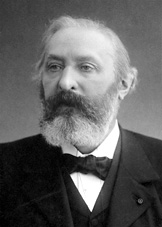
Monsieur Prudhomme has the singular distinction of having been awarded the 1901 Nobel Prize in Literature, the first year the prize was ever awarded. Not that that means much. Although I still have hope of running across him accidentally one of these days--I plan to check the index in every Norton anthology that crosses my path--I haven't been able to find a significant collection of his work by a verifiably competent translator.
There are a few poems available online, most frequently "The Broken Vase," or, alternatively, "The Fissured Vase." The worst translation is certainly that available on poemhunter.com. "Don't touch! It's broken." Snork.
The best, in my opinion, is the one at the On Being website. It's the most contemporary, and the translator specified that the fan was "a lady's fan," which made a bit of difference to me because I had been imagining a ceiling fan. Please don't ask me how a vase would be broken by a ceiling fan; I hadn't made it that far in my musings. I like to think I would've gotten there on my own eventually, and I thank you kindly for humoring me in that belief. But once I realized what type of fan Prudhomme meant, the poem took on a slightly different tone. Obviously.
(It also started me on a train of thought about why only women used fans. Were men supposed to be too tough to get hot? But I digress. Again.)
The last two stanzas of the version posted at On Being are:
The quick, sleek hand of one we love
Can tap us with a fan's soft blow,
And we will break, as surely riven
As that cracked vase. And no one knows.
The world sees just the hard, curved surface
Of a vase a lady's fan once grazed,
That slowly drips and bleeds with sadness.
Do not touch the broken vase.
Nice, yes? The Nobel committee awarded the prize to Prudhomme "in special recognition of his poetic composition, which gives evidence of lofty idealism, artistic perfection and a rare combination of the qualities of both heart and intellect." I'm looking forward to running across more Prudhomme some day, and the assignment still stands. If you find him somewhere, let me know.
Next up: 1982 winner Gabriel García Márquez for no other reason than that I've had Love in the Time of Cholera and News of a Kidnapping sitting in my to-read pile forever. Maybe I'll re-read One Hundred Years of Solitude again, too, just for kicks. 'Cause I'm crazy like that.
Monsieur Prudhomme has the singular distinction of having been awarded the 1901 Nobel Prize in Literature, the first year the prize was ever awarded. Not that that means much. Although I still have hope of running across him accidentally one of these days--I plan to check the index in every Norton anthology that crosses my path--I haven't been able to find a significant collection of his work by a verifiably competent translator.
There are a few poems available online, most frequently "The Broken Vase," or, alternatively, "The Fissured Vase." The worst translation is certainly that available on poemhunter.com. "Don't touch! It's broken." Snork.
The best, in my opinion, is the one at the On Being website. It's the most contemporary, and the translator specified that the fan was "a lady's fan," which made a bit of difference to me because I had been imagining a ceiling fan. Please don't ask me how a vase would be broken by a ceiling fan; I hadn't made it that far in my musings. I like to think I would've gotten there on my own eventually, and I thank you kindly for humoring me in that belief. But once I realized what type of fan Prudhomme meant, the poem took on a slightly different tone. Obviously.
(It also started me on a train of thought about why only women used fans. Were men supposed to be too tough to get hot? But I digress. Again.)
The last two stanzas of the version posted at On Being are:
The quick, sleek hand of one we love
Can tap us with a fan's soft blow,
And we will break, as surely riven
As that cracked vase. And no one knows.
The world sees just the hard, curved surface
Of a vase a lady's fan once grazed,
That slowly drips and bleeds with sadness.
Do not touch the broken vase.
Nice, yes? The Nobel committee awarded the prize to Prudhomme "in special recognition of his poetic composition, which gives evidence of lofty idealism, artistic perfection and a rare combination of the qualities of both heart and intellect." I'm looking forward to running across more Prudhomme some day, and the assignment still stands. If you find him somewhere, let me know.
Next up: 1982 winner Gabriel García Márquez for no other reason than that I've had Love in the Time of Cholera and News of a Kidnapping sitting in my to-read pile forever. Maybe I'll re-read One Hundred Years of Solitude again, too, just for kicks. 'Cause I'm crazy like that.
Tuesday, September 18, 2012
This One Is About Books. (Updated)
In the blog world, there's nothing I hate more than seeing a new post up on my favorite knit blogger's page, and I gleefully click expecting to be regaled by stories of hilarious knitting mishaps, and it turns out that there are three sentences about knitting and then three pages about her garden. Or her cousin's brother-in-law's neighbor's toddler. I don't care about gardens, no matter how beautiful, or toddlers I've never met, no matter how cute.
But I fall into that same trap. Sometimes I write about dogs. Sometimes knitting. Sometimes . . . okay, that's pretty much it. But I figure if you read my posts because you like dogs and the post turns out to be about knitting, or vice-versa, you're probably annoyed. Hence, I have decided (at least until I get bored with the conceit) to start warning my three regular readers about what's coming up, and then you can click or not.
This One Is About (TOIA) Books.
(Notice how it's not about dogs or knitting? Aren't you glad I warned you?)
The Nobel Prize in Literature is due to be announced next month, and that means it's time for me to make my annual vow to read at least one work by every Nobel-winning author since the beginning of the prize. Last year I went so far as to buy a copy of Tomas Transtromer's poetry. But I have not cracked the spine.
This year I thought I'd start the other way around and work from 1901 forward. But it turns out that winning the Nobel does not guarantee longevity the way you'd think it might. Neither the Wichita Public nor the Newman nor the Wichita State libraries has any collections by René François Armand (Sully) Prudhomme. I did find a public-domain site that has his poems nicely organized, which is great, except that they're in French. My memory of high school French doesn't extend much beyond "Bonjour" and "le chat," so unless he writes a lot about how to greet a cat, that probably won't help much. I plugged a stanza into Google translate just to see what would happen and got back a lot of tantalizing nonsense about stars and stairs and diamonds. No cats.
But I'm not giving up on Prudhomme. I think I might like him, if I can find a reasonable English translation. But for now it's back to work. I have stacks of grading to do (five stacks, to be specific), and the students care about whether I'm going to mark them down for failing to use the series comma (yes, I am), not about the difficulty in locating material by a long-dead French poet.
So I am assigning this task to you, Internet. If you happen to know where I can find some Prudhomme in English translation, let me know.
Update: I can't get a copy of Prudhomme's poems, but I could buy a jigsaw puzzle of his portrait.
But I fall into that same trap. Sometimes I write about dogs. Sometimes knitting. Sometimes . . . okay, that's pretty much it. But I figure if you read my posts because you like dogs and the post turns out to be about knitting, or vice-versa, you're probably annoyed. Hence, I have decided (at least until I get bored with the conceit) to start warning my three regular readers about what's coming up, and then you can click or not.
This One Is About (TOIA) Books.
(Notice how it's not about dogs or knitting? Aren't you glad I warned you?)
The Nobel Prize in Literature is due to be announced next month, and that means it's time for me to make my annual vow to read at least one work by every Nobel-winning author since the beginning of the prize. Last year I went so far as to buy a copy of Tomas Transtromer's poetry. But I have not cracked the spine.
This year I thought I'd start the other way around and work from 1901 forward. But it turns out that winning the Nobel does not guarantee longevity the way you'd think it might. Neither the Wichita Public nor the Newman nor the Wichita State libraries has any collections by René François Armand (Sully) Prudhomme. I did find a public-domain site that has his poems nicely organized, which is great, except that they're in French. My memory of high school French doesn't extend much beyond "Bonjour" and "le chat," so unless he writes a lot about how to greet a cat, that probably won't help much. I plugged a stanza into Google translate just to see what would happen and got back a lot of tantalizing nonsense about stars and stairs and diamonds. No cats.
But I'm not giving up on Prudhomme. I think I might like him, if I can find a reasonable English translation. But for now it's back to work. I have stacks of grading to do (five stacks, to be specific), and the students care about whether I'm going to mark them down for failing to use the series comma (yes, I am), not about the difficulty in locating material by a long-dead French poet.
So I am assigning this task to you, Internet. If you happen to know where I can find some Prudhomme in English translation, let me know.
Update: I can't get a copy of Prudhomme's poems, but I could buy a jigsaw puzzle of his portrait.
Subscribe to:
Posts (Atom)